
Tech
Adoption of AI in our work: How we use AI in our day to day
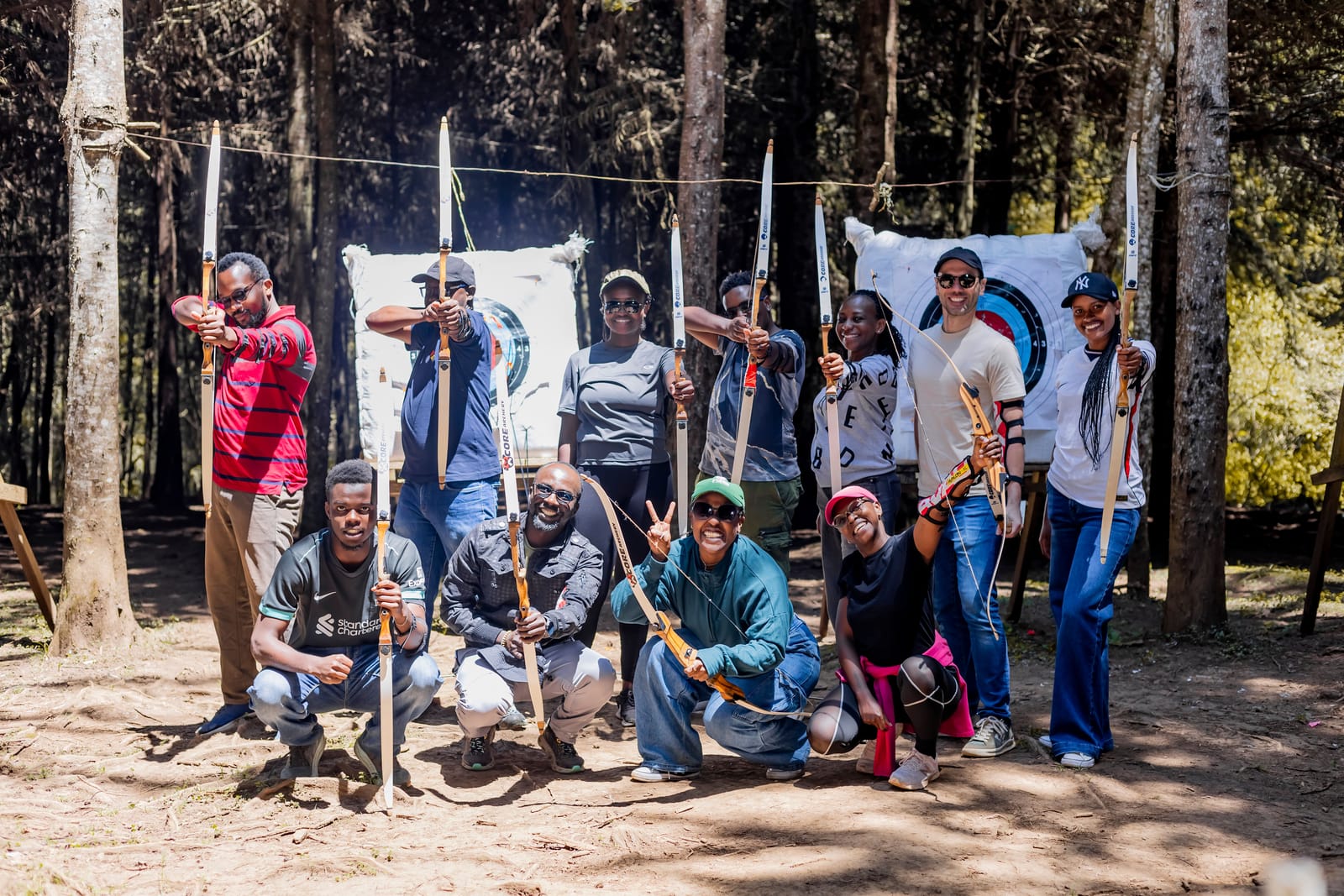
How does a data team actually use AI day to day? I asked some of our team members to share how it shows up in their work.
Jonathan
As Solutions Lead, I use AI at almost every stage of my work, from the first read of a brief to the technical build.
At the start of a project, it helps me get through long Terms of Reference quickly and pull out what actually matters. From there, I use it to draft concept notes and proposals, including the parts that are easy to get vague about: what's in scope, what isn't, and how we'll know the work is done. On the technical side, it's a second pair of eyes. It reviews code, runs QA checks and helps me think through how a solution should be scoped. It also handles a lot of the admin: drafting emails to stakeholders and taking care of repetitive tasks I'd otherwise do by hand.
The biggest difference is speed and catching problems early. Documents that used to take days now take hours, and AI often spots an edge case while it's still cheap to fix instead of halfway through a project. The time I save each week goes back into the parts of the job that need me most: research, technical design and spending more time with clients.
Alessandro
As Managing Director, the way I'd sum up AI is that it has given me breadth, not depth. The depth (knowing what good looks like, and making the call) still has to come from me. What's changed is how much ground I can cover.
On the technical side, I can plan and build much faster. I no longer lose hours looking up syntax or writing unit tests by hand, so my time goes to the parts that matter more: the architecture, how systems fit together, and whether what we're building actually meets the client's needs.
On the management side, AI helps me with compliance and research. That has made me far more capable on financial and legal questions. I still bring in accountants and lawyers, but now for the questions that really need them, not for everything. And when there's something I want to understand properly, it works like a patient coach, helping me learn rather than just handing me an answer.
But where AI helps me most is staying organised. I keep notes, plans, and a knowledge base that's always growing, and AI makes all of it easy to maintain. It has become a living memory for the company: the place where what we know is written down, kept current, and easy to find.
Fred
The biggest change is reach. AI hasn't replaced my judgement. It has widened the set of problems I can take on myself. A lot of my work sits in the gap between the data and the systems it lives in, and that's where AI helps me most. On dashboards, it helps me with design ideas and with QA: checking the numbers against the underlying data before anyone else sees them.
I don't take the answers on faith. When AI suggests a fix, I test it against the real data: I check that the numbers reconcile, that the change actually works. Then I use it to turn what I found into something my team can act on, like a clear write-up, a ticket or a note to a partner.
It keeps me on top of meetings too. I use AI to turn meeting notes into a clear summary of the objectives, the action items and who owns them, and the next steps. That way I leave every meeting knowing exactly what's expected of me.
Macharia
My use of AI at work has become operational rather than exploratory. As IT Lead, I run most of the day-to-day platform work through AI: debugging Kubernetes issues, tracing database failures, resolving infrastructure-as-code conflicts, and configuring security settings. That's not the whole of it. I've also used it for formal writing that sits around infrastructure decisions: contributing to proposals, preparing technology evaluations, and drafting network architecture proposals for various integrations. There's a commercial layer too: cost and pricing analysis, hosting proposals, and the requirements that follow them. I also use it to build small automations I wouldn't otherwise have time for and to refine their designs over several iterations. I use AI iteratively, correcting the output against real constraints until it's right, rather than just taking the answers blindly.
Peter
I use AI constantly, and mostly for work that isn't glamorous. It manages refactors when I'm fixing bugs, so a surgical change stays surgical instead of unraveling half the module. When I'm in unfamiliar code or troubleshooting a failure, an AI agent digs through the codebase with me. It covers more ground than I would alone and asks the questions I'd eventually get to. It's become my first stop for search, ahead of a search engine more often than not. I ask in plain language, get a reasoned answer, and only click through when I need the source. I sketch system designs with it, stress-testing architecture ideas before they cost me a sprint. It teaches me new concepts the way a patient colleague would. And on client correspondence, it polishes my grammar and tone so the writing sounds like my best self on my best day.
The interesting shift isn't any single one of those. It's that none of them replaced my judgment. Every one of them amplified it. The tools handle breadth and speed; I still own the decision.
Jane
AI has become part of how I think through my work, not just a tool for getting things done faster. I use it to pressure-test ideas before I commit hours to them, whether I am restructuring a query, troubleshooting an approach, or thinking through a data model. I can challenge the assumptions, see where an approach breaks, and refine it before I start building.
It has also become part of my QA process. I define the checks I want AI to run as a reusable skill, including investigating dashboard discrepancies against the underlying data. Rather than manually tracing every issue through the model layer, AI can work through those checks and help identify where numbers diverge, which I then validate. It shortens the time between noticing a problem and understanding it.
When collaborating with teammates on projects, I also use AI to review analytics code PRs against our modelling and testing standards. It helps make that first layer of review more consistent, while I can focus on the decisions that require context and judgement. I also use it to turn technical logic and decisions into documentation that others can pick up later.
The biggest change is not simply that I work faster. It is that AI gives me more capacity to question, validate, and improve the work that still requires my judgement.
Judy
There was a version of me, not long ago, who treated AI as a novelty, something you tried once, laughed about, and went back to doing things the old way. That version is gone. At some point it stopped being a tool I had to remember to open, and became something I just use without thinking about it, while I build, while I'm stuck on something, while I write, while I'm still figuring out what I actually think.
Here's the honest part: a lot of my week used to go to things that weren't really "the work", they were just what stood between me and the work. Double-checking things. Rewriting the same sentence five times. Going in circles trying to figure out why something wasn't working. None of that was the hard, interesting part of my job. It was just the price of getting there. AI didn't take away the real work, it took away the waiting room in front of it.
What's left, once that's gone, is better than I expected. I get to spend more time on the questions that actually need a person to answer them; why something is happening, what the result is really telling us, whether an idea is worth hours of my time or just looks that way. Those decisions were always mine to make. Now I actually have the space to make them properly, instead of squeezing them in around everything else.
If I'm being honest, the biggest change isn't how much I get done. It's what I get to pay attention to. I'm not stretched across a dozen small things anymore, I get to actually show up for the few that matter.
Bella
As an Analytics Engineer, my role is to tease out the real needs of clients and translate them into robust data systems that outlast our project together. AI doesn't do that work for me, but it changes how fast I can test my thinking.
My day-to-day work always begins with client conversations. I take the time to really understand their needs and then draft a model plan and use an AI agent to refine and pressure-test the logic of our data game plan. This looks like planning how to efficiently script SQL models, testing for data edge cases, and iterating through models to consider different trade-offs and the main benefits for a client. The goal is to verify all the logic well before we build so that there is no time misspent on redoing work later.
After the logic review, I pair manual QA with agentic checks. That means tasking agents with reviews of new models against our tests and checking for any flagged anomalies, so data quality holds across the whole architecture. Once this review and data check is complete, I finish the work by documenting the build, which gives the client a record and gives us grounded context for future iterations. All this planning and support results in faster iteration without giving up the judgement that makes data assets last.
A note on how we use AI. The work described here uses only AI tools that Ona Insights has approved for company use, and only with information that isn't sensitive. We don't put confidential client data or personal data into these tools without strict guardrails. On client projects, how we handle data is set by our agreement with that client, and someone on our team reviews anything AI produces before it's used.