
Tech
Bridging the Accountability Gap: How OI Rafiki Transforms Humanitarian Complaint Intake
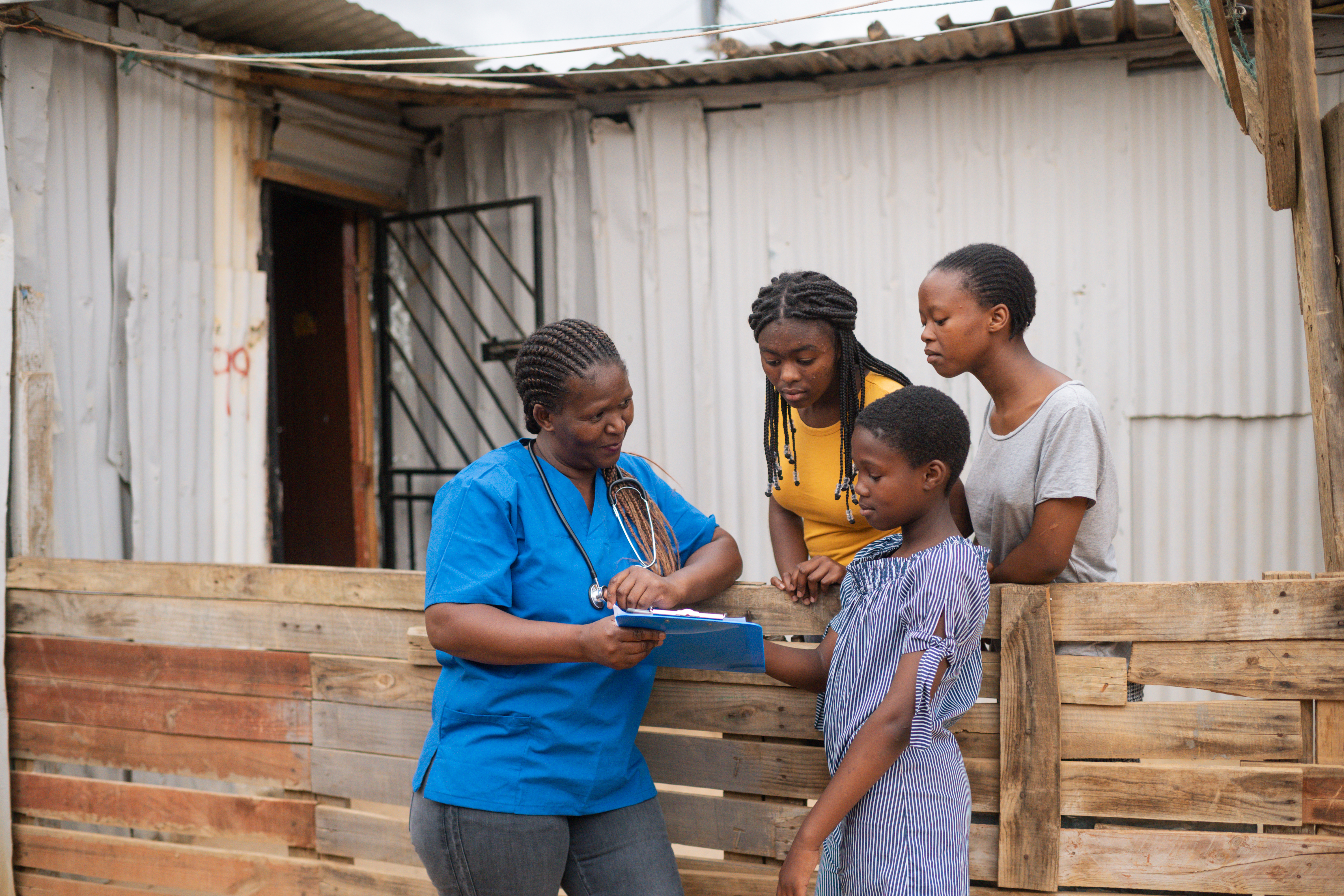
In humanitarian and development programming, the distance between a community member raising a concern and that concern reaching an actionable response is often a critical bottleneck. True accountability hinges entirely on this foundational capability: affected communities must have a frictionless way to voice challenges and receive a response. When this entry point fails, the integrity of the entire intervention is compromised.
Traditionally, intake failures occur at the frontline. Call center hotlines collapse during sudden volume spikes, paper-based forms are plagued by logistical delays, and high-tech digital portals frequently alienate beneficiaries in remote or conflict-affected areas who lack stable internet connectivity. Compounding this is the structural challenge of sourcing qualified local operators who possess the exact language skills and localized contextual knowledge required to triage sensitive cases. Scaling human workforce capacity rapidly enough to meet these demands is rarely sustainable or economically viable.
The systemic consequences of these failures are profound:
- Invisible failures: Critical complaints go entirely unrecorded, rendering patterns of systemic failure completely invisible in programmatic data.
- Erosion of trust: Beneficiaries who brave the reporting process only to receive silence lose faith and stop reporting altogether.
- The vulnerability paradox: The very communities most in need of functioning accountability channels are ultimately the least well served by the systems designed to protect them.
To break this cycle, Ona Insights developed OI Rafiki, a project showcase demonstrating an innovative, WhatsApp-native AI agent designed to act as a digital first responder for community complaint management.
Our Approach: Rethinking the Intake Paradigm
The core design philosophy behind OI Rafiki was not to incrementally optimize the status quo, but to remove the human availability constraint entirely from the intake phase. Instead of attempting to hire more operators or build increasingly complex digital forms, the goal was to leverage a platform that communities already trust and use on a daily basis.
Why WhatsApp? It is already the primary communication lifeline for vast segments of the population organizations serve. It operates efficiently on basic smartphones, requires zero additional app installations, and eliminates the friction of account creation or onboarding codes.
The primary technical investment focused on constructing a highly reliable, automated pipeline that seamlessly transforms a fluid, natural language message into a structured, highly actionable case record complete with identity verification and proactive closing-loop notifications.
How It Works: A Frictionless Architecture
OI Rafiki operates as an end-to-end architecture capable of sitting on top of an existing case management system via a simple configuration change. The user journey is defined by three distinct, automated phases:
1. Conversational Complaint Intake
- Low friction access: A community member sends a simple text to the dedicated Rafiki WhatsApp number. There are no registration forms or codes required.
- Natural dialogue and slot-filling: Through a conversational flow, the agent dynamically collects mandatory fields: name, location, description of the issue, date, affected population, and urgency.
- Validation and instant routing: Before submission, the agent presents a structured summary to the user for confirmation. Once confirmed, the data is pushed to the backend, and a unique Case ID is generated and returned to the complainant in under 60 seconds.
2. Autonomous Case Follow-Up
Returning beneficiaries can independently track their case status without ever needing to navigate a busy phone queue or speak to an agent. By inputting their Case ID and registered phone number, the system automatically cross-references and verifies their identity against the backend record, securely serving the real-time status (Open, In Progress, or Closed) directly inside the chat window.
3. Proactive Notification (Closing the Loop)
The system fundamentally shifts the burden of communication away from the beneficiary. The moment a human operator updates a record within the case management system, a targeted WhatsApp notification is automatically triggered. The complainant is notified by name and updated on their specific case, closing the accountability loop.
The Technical Framework
OI Rafiki achieves its high reliability by decoupling its operation across three robust, interconnected infrastructure layers:
- The communication layer (Turn.io): Orchestrates the conversation journey and manages the precise handoff between the AI model and the data backend. Crucially, phone number resolution is handled securely within the Turn.io code layer before the AI agent executes. This ensures user identity data is always verified via hardcoded WhatsApp event metadata rather than being dynamically (and potentially inaccurately) generated by the AI model.
- The intelligence layer (Google Gemini Pro): Powering the conversational engine, Gemini Pro executes structured system prompts utilizing strict slot-filling logic and rigorous scope guardrails. Stringent session isolation rules ensure that complaint fields are always gathered entirely fresh, preventing data bleeding or bias even for returning users whose identities are already cached by the system.
- The data layer (Directus REST API): Acts as the bridge between the chat interface and the core database. Upon user validation of the complaint summary, a clean, structured JSON payload is posted via REST API to Directus, creating the permanent case record and instantly returning the auto-generated Case ID. Human-driven updates on this layer simultaneously trigger outbound notifications back through Turn.io.
What's Next
Every unrecorded complaint represents a profound failure in humanitarian delivery, a community member who stepped forward to speak but was fundamentally not heard.
OI Rafiki proves that AI can be deployed ethically and effectively to remove intake bottlenecks, freeing up human professionals to focus entirely on what they do best: reviewing, investigating, and resolving critical cases.
If you are currently running a development or humanitarian programme where an accountability gap exists, we invite you to connect with us to see what OI Rafiki can achieve in your specific operating context.