
Citizen Engagement
Building UNICEF State of Palestine's Complaints Management System
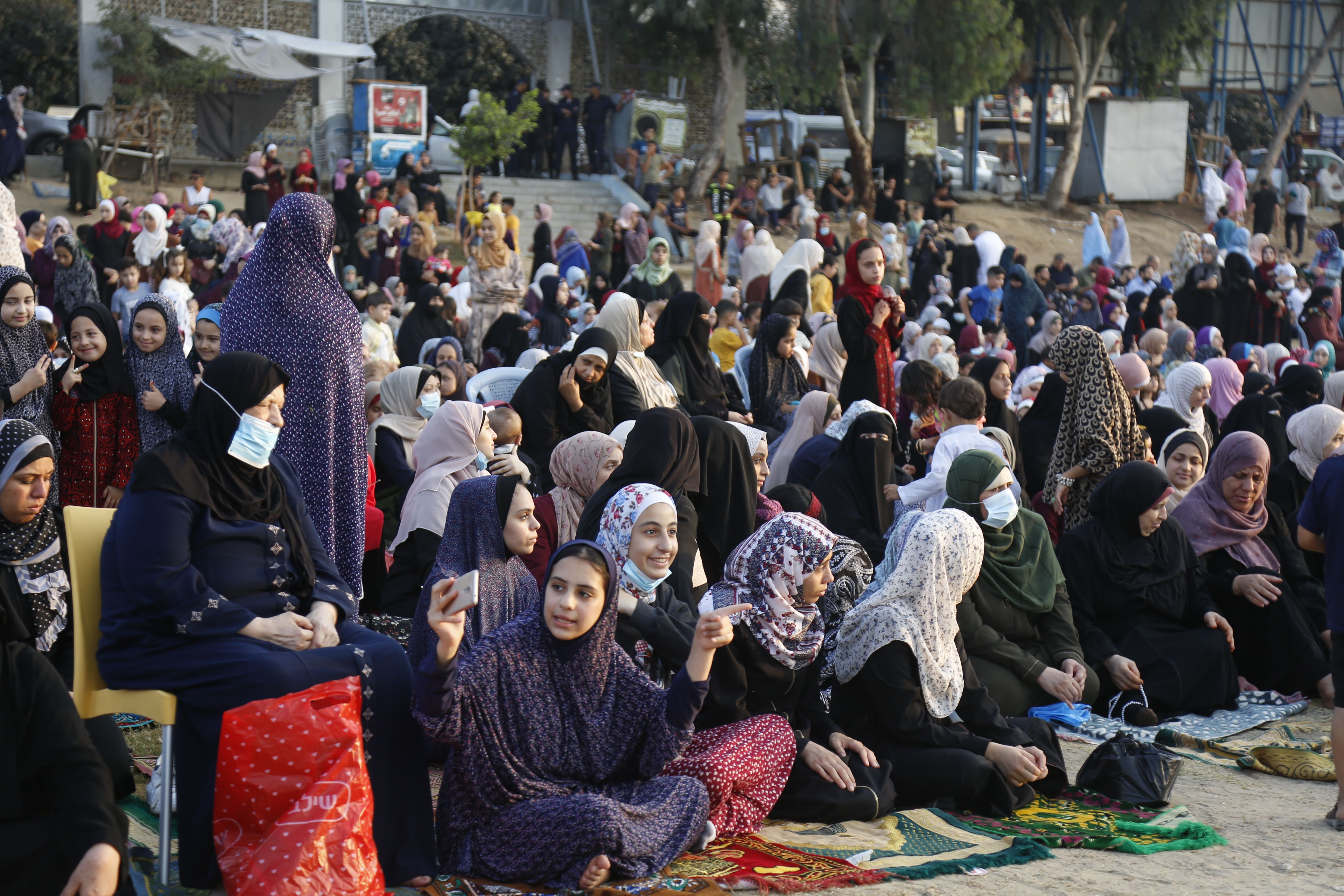
UNICEF State of Palestine partnered with Ona to build its own Complaints Management System, based on the CFMHub platform Ona developed for UNICEF Sudan, later integrated with UN Women's Wasil system to share data across both.
UNICEF State of Palestine (UNICEF SoP) has invested heavily in strengthening its accountability to the communities it serves, developing standard operating procedures, running workshops with implementing partners, and drafting a feedback and complaint policy as part of its Accountability to Affected Populations (AAP) and Prevention of Sexual Exploitation and Abuse (PSEA) commitments.
Even so, feedback kept arriving through disconnected channels, and pulling it together for analysis was a manual, time-consuming exercise. UNICEF SoP saw digitalization as the way to close that gap.
Ona was brought on to build a bespoke Complaints Management System for UNICEF SoP, extending the CFMHub platform originally developed for UNICEF Sudan. The system needed to support structured data collection, visual reporting dashboards, integrations with the tools UNICEF SoP and its partners already use, and hands-on guidance for the people who'd run it day to day.
Problem Description and Context
Before this project, UNICEF SoP relied heavily on SugarCRM, a system managed by the World Food Programme (WFP), to record and track complaints. SugarCRM came with real shortcomings for UNICEF SoP's needs: exporting data out of it was cumbersome, it had no built-in visualization or dashboard capability, its intake channels were limited, and UNICEF SoP itself had constrained access to the system since it belonged to WFP.
That fragmentation made manual data analysis a real bottleneck. Without a shared system of its own, it was hard for UNICEF SoP to track how complaints moved from intake to resolution, spot trends across categories or locations, or report consistently on accountability metrics to donors and leadership.
Our Approach
Ona's discovery process started with structured conversations rather than a technical spec. An introductory meeting with UNICEF SoP on August 19, 2024 brought together the AAP and ICT teams to align on the broader vision, followed by a deeper requirements session on September 10, 2024.
Alongside these conversations, Ona reviewed UNICEF SoP's existing Standard Operating Procedures for Community Feedback Mechanisms, its AAP-PSEA Operational Framework, and its data protection compliance checklist, to make sure the system design would fit both the operational workflow and the data protection obligations UNICEF SoP already had in place.
Rather than starting from a blank slate, Ona proposed building on the CFMHub system already developed and proven for UNICEF Sudan, adapting its architecture, intake forms, and case workflow to UNICEF SoP's specific partners, sectors, and reporting needs.
The Technology
The system architecture follows the same pattern as Ona's other case management builds: a central case management web app surrounded by pipelines that bring in cases from multiple intake channels and feed a dedicated reporting layer.
- Case intake: RapidPro flows for WhatsApp and SMS, an offline-capable InForm (built on Open Data Kit, or ODK) form for field registration, a dedicated email address for complaints, a direct API integration with the Sawa system, and case data brought in from WFP's SugarCRM system as an additional source.
- Data ingestion: Airbyte pipelines pull data from each of these channels at regular intervals into the core database.
- Data storage: a PostgreSQL database, keeping raw ingested data separate from the processed data used for analysis and notifications.
- Data modeling: dbt transformation scripts, version-controlled in GitHub, turn raw case data into reporting-ready indicators.
- Case management web app: built on Directus, handling the case lifecycle, referrals, notifications, and platform administration.
- Reporting: dashboards covering feedback volume and trends, resolution and response metrics, channel performance, geographic distribution, categorization accuracy, and SLA compliance were created in Power BI.
The case lifecycle mirrors the same state machine Ona has used on similar projects: a case moves from New to Referred once a focal point is assigned, to In Progress once they acknowledge it, to Finalized Feedback once a resolution is logged, and finally to Closed once the beneficiary confirms they're satisfied, looping back to Referred if they're not.
Ona's proposal for services covers a two-year engagement, delivered iteratively across data collection configuration, data connector configuration, the complaints management interface, user manuals, staff training, and ongoing support and maintenance.
A direct API integration with SugarCRM wasn't feasible. Instead, the team settled on a manual export process: case data is exported from SugarCRM, run through a cleaning script that standardizes fields and matches SugarCRM's categorization to the CFM system's taxonomy, and then imported into the system. The Sawa system, by contrast, connects through a direct API integration, the same approach used for UN Women's Wasil system. Around the same time, UNICEF SoP's system was also integrated with Wasil, letting the two platforms share case data directly instead of requiring staff to log into separate systems to get a full picture of what was happening across agencies.
Challenges
Bringing SugarCRM data into the new system turned out to be the hardest part. SugarCRM's categorization and taxonomy didn't map cleanly onto the structure UNICEF SoP needed, so reconciling those definitions took real work.
A direct API integration with SugarCRM wasn't possible, since it's a system WFP manages independently with its own access constraints. The team worked around this by exporting case data manually and building a script to clean it and match it to the CFM system's categorization before importing it rather than relying on a live data pipeline.
On the training side, language was a real constraint. Sessions were delivered in English, so the team relied on a translator to make sure UNICEF SoP staff could follow along and use the system confidently.
Getting WhatsApp working through RapidPro was its own piece of work, separate from the core system build, but necessary to make the mobile intake channel usable.
Results & Impact
Since launch, the system has recorded over 80,000 cases, with more than 70,000 already resolved and closed. Of these, roughly 65,000 relate to social policy and 40,000 to cash-related matters.
Cases now flow in from across UNICEF SoP's full set of intake channels: over 77,000 imported from SugarCRM via the cleaned manual export process, close to 1,000 coming through the Sawa system's direct integration, and around 600 shared over from UN Women's Wasil system.
Even without a live API connection, the cleaned SugarCRM import replaced the fully manual reporting process UNICEF SoP relied on before, and the Wasil integration means UNICEF SoP and UN Women can now see shared cases without either team needing to log into the other's platform.
Key Takeaways
- Building on a proven system (CFMHub from UNICEF Sudan) instead of starting from scratch shortened the path from requirements to a working platform.
- A system doesn't have to be unified from day one. UNICEF SoP started with its own platform and connected it to UN Women's Wasil system later, once both were mature enough to integrate.
- Integrating two agency systems directly means staff can see shared cases without logging into multiple platforms, which matters as much for adoption as any single feature.
- Structured discovery, grounded in existing SOPs and frameworks, keeps the system aligned with an organization's real compliance and reporting obligations.
Where Things Stand Now
The system is now running independently, with Ona providing ongoing hosting and support rather than active development. UNICEF SoP's team runs day-to-day operations on the platform, with Ona in a maintenance role to keep the system reliable.
"Working with the Ona team was highly professional, collaborative, and solution-oriented. Throughout the project, the Ona team demonstrated strong technical expertise, responsiveness, and a genuine commitment to understanding our operational needs and delivering practical solutions.
Before this project, many of our Community Feedback Mechanism processes relied on manual and fragmented workflows, making data collection, analysis, and reporting more time-consuming.
Through our partnership with Ona, we now have a more streamlined, reliable, and user-friendly digital solution that has significantly improved the way we manage and utilize community feedback.
The new platform has enabled our team to access more timely insights, strengthen evidence-based decision-making, and improve overall efficiency in managing community feedback data. We truly appreciate the partnership and look forward to future opportunities to collaborate."
— Mahmoud Abu Haniya, Senior Digital Impact Associate, UNICEF, SOP
If your organization is looking to bring scattered feedback channels into one accountable system, we'd love to talk about how Ona Insights can help.